
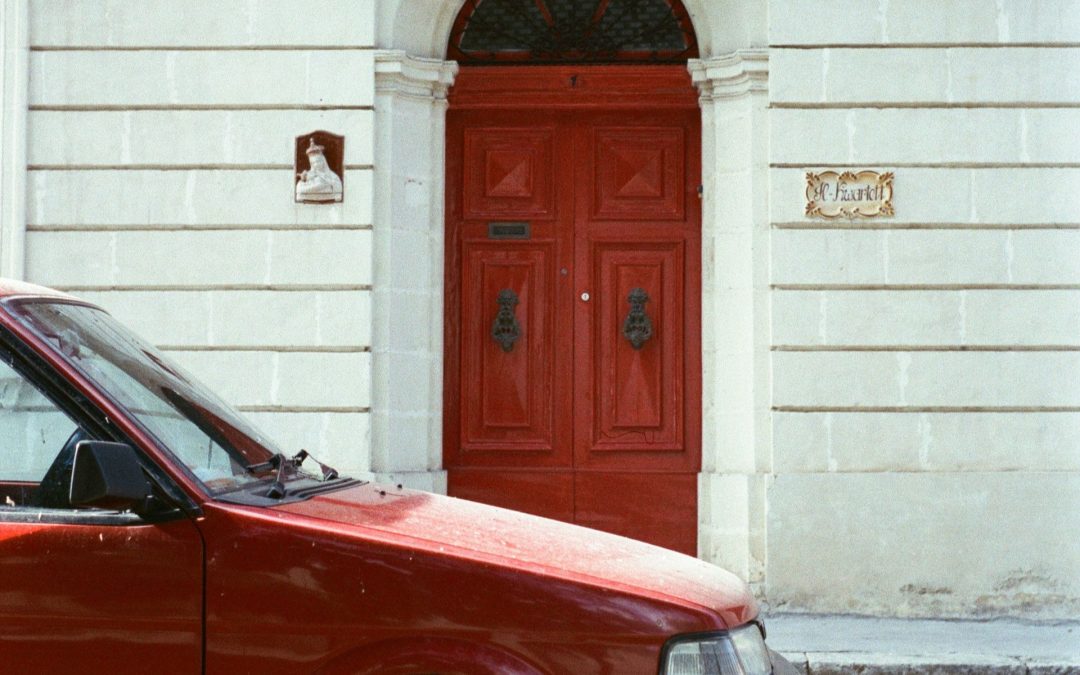
Busy roads and high-exposure streets are some of the hardest contexts to design front doors for. Clients want breeze without noise, outlook without feeling on display, and security without turning the house into a bunker. On compact frontages, a standard door plus security screen arrangement often ends up looking heavy from the street and feeling awkward to use.
This article looks at how to design front entries for homes on busy roads so they can breathe, feel safe and sit calmly in the façade. It builds on the broader ideas in designing front doors your clients love living with, not screens they tolerate and the façade guidance in ventilated front entries that do not rely on bolt-on screens, and focuses on traffic-heavy, high-exposure conditions.
Why busy roads are so hard on front doors
Front doors facing busy roads are under pressure from several directions at once. Typical issues you will recognise include
- Constant traffic noise that discourages people from opening windows and doors
- A sense of being watched from passing cars and pedestrians
- Dust and exhaust collecting around thresholds and door hardware
- Higher perceived security risk due to easy public access
The result is often predictable
- Solid doors stay shut most of the time, even when the air inside is stale
- Security screens are locked over glazed doors, darkening the entry hall
- Homeowners retreat to the back of the house, and the front entry becomes something they rush through
The design challenge is to create a front door that feels robust and private enough for the street, while still being a usable part of the home’s light and airflow strategy. A multi-function entry door gives you more levers to work with than the usual door-plus-screen combination described on our architect pillar page.
Separate security, privacy and airflow in your brief
On busy roads, “security”, “privacy” and “ventilation” often get bundled together in a vague sense of unease. Untangling them in your brief makes it easier to design a clear solution.
Talk with your clients about each one separately
- Security
- How comfortable do they feel answering the door after dark
- Do they want to see and speak to visitors while still behind a secure layer
- Are they worried more about opportunistic access or targeted break-ins
- Privacy
- How close is the front door to the footpath or road edge
- Are people looking in from cars at similar eye level
- Is the entry aligned with living spaces or just a hall
- Airflow
- Do they want to purge heat in the evening using front-to-back breezes
- Are they comfortable leaving openings active when they are deeper in the house
- Are there other viable inlets if the front door is shut
Once you have these three strands clear, you can decide what the front door itself should do, and where other elements (fencing, landscaping, secondary windows) might carry some of the load. The overall framework in designing front doors your clients love living with, not screens they tolerate gives a useful structure for that conversation.
Using a multi-function door as a controlled air inlet
A multi-function entry door combines a solid entrance door with a built-in sliding window section and security mesh. For busy roads, this lets you create a controlled air inlet at the threshold.
Practically, it allows the occupants to
- Lock the main door as usual
- Slide open the internal glass to admit air through the mesh
- Stand back from the doorway while still seeing and speaking to visitors at the secure opening
In high-exposure locations, this is often more usable than a door-plus-screen combination because
- There is only one leaf to manage, which makes “locked but ventilating” a simple routine
- The mesh opening can be sized and positioned deliberately to suit the street context
- The door reads as one element in elevation rather than a solid door hidden behind a busy screen
You can then treat the front door as one node in your cross-ventilation strategy, aligning it with rear sliders, highlight windows or stair voids as we suggest in ventilated front entries that do not rely on bolt-on screens.
Tuning glass and mesh for busy streets
On a quiet street you might happily specify clear glass in the door leaf. On busy roads and high-exposure sites, the door needs more careful tuning so it does not feel like a shopfront.
You can adjust three key variables
- Glass type
- Clear laminated glass where a visual connection to the street is desired and setback allows it
- Translucent or patterned glass when the door is close to the footpath or traffic lane
- Mesh appearance
- Darker mesh tends to visually recede from outside and makes the glazed portion read as a single panel
- Finer stainless or high-grade mesh can feel less “institutional” while keeping strength
- Glazed opening position
- Place the mesh-protected opening at a height that aligns with typical eye level for someone standing at the step
- Consider whether people in cars can see directly through to the back of the house when glass is open
Handled well, this means a resident can put the door into a “locked but breathing” state without feeling like passers-by are staring into their home. That sense of control is important for long-term comfort on busy streets, particularly for older residents, as explored in helping older Australians feel steady and confident at their front door.
Managing noise and dust at the threshold
Traffic brings not just visual exposure but also noise and dust. While a front door cannot solve everything, your detailing choices make a difference.
Design considerations include
- Door leaf and seals
- A solid, well-sealed leaf with quality perimeter seals helps keep noise down when the door is in its fully closed mode
- In secure-ventilation mode, aim to ensure that most of the opening is through the mesh rather than uncontrolled gaps around the perimeter
- Threshold and landing
- Provide a hard-wearing, easy-to-clean landing surface that can handle dust and fine grit from the road
- Tilt the landing slightly away from the door so dirty water does not pool against the threshold
- Cleaning access
- Consider how easy it will be to clean mesh, glass and threshold surfaces from inside and outside
You can use the technical ideas from detailing multi-function entry doors in wall systems to ensure your jamb and threshold details remain robust under these conditions. Small adjustments to drip edges, sills and clearances can reduce long-term maintenance for households living next to busy routes.
Designing a confident but not aggressive street presence
On high-exposure streets, some clients default to “fortress mode” at the front door. From a design point of view, this can make the house feel unwelcoming and out of step with the neighbourhood. A multi-function entry door lets you design a more balanced street presence.
Helpful moves include
- Use clear, simple forms around the entry rather than visually heavy bars, grilles or double doors
- Coordinate the door colour with other façade elements so it feels like part of a calm composition
- Use lighting to make the entry legible and safe without resorting to harsh security-style fittings
The façade strategies in ventilated front entries that do not rely on bolt-on screens are particularly useful here. They encourage you to treat the door as one considered element in the street elevation rather than a problem to be hidden.
Keeping the entry usable as residents age
Homes on busy roads are often chosen for access to services and transport, which can be attractive for older residents. The same design decisions that make the door feel safe today can support ageing in place later.
Apply the universal design principles from [helping older Australians feel steady and confident at their front door
- Keep the approach path and landing as level and even as possible so residents can pause safely with a walker or shopping
- Use lever handles and accessible lock positions so the door does not demand strong grip or awkward reach
- Make the “locked but ventilating” mode easy to understand and operate with one or two simple actions
Because a multi-function door uses one leaf instead of a door and a separate security screen, you are reducing complexity at exactly the point where it often becomes a problem for older people: the main threshold between inside and outside.
Retrofitting busy-road entries in existing homes
Many of the highest-exposure sites you will work on are existing houses where the street has become busier over time. In these cases, replacing the front door with a multi-function unit is often part of a broader retrofit.
A practical retrofit process is
- Diagnose what the current entry is doing badly: noise, light, perceived safety, effort and airflow
- Decide which elements can change (door, landing, lighting, numbers) and which must remain (structure, heritage features)
- Use a multi-function door, a modest façade refresh and threshold improvements to create a calmer, more usable entry
Our dedicated guide on retrofitting Air Flow Doors into existing homes walks through this in more detail. Applied to busy-road conditions, it gives you a way to offer clients a tangible improvement in everyday life without committing them to a full façade rebuild.
A simple framework for busy-road front doors
For your next project on a busy road or high-exposure street, you can run the front door concept through a straightforward framework
- Intent
- What exactly should the door do for security, privacy and airflow in this context
- Form
- Would a single multi-function entry door simplify the façade and make ventilation more usable than a door-plus-screen combination
- Detail
- Do your glass, mesh, threshold and hardware choices support quiet confidence for the user, now and as they age
If the scheme that uses a multi-function door gives you a calmer façade, better controlled airflow and a more confident everyday experience at the threshold, it is likely the stronger option. You can then use designing front doors your clients love living with, not screens they tolerate to frame the story, ventilated front entries that do not rely on bolt-on screens to resolve the elevation, helping older Australians feel steady and confident at their front door when ageing in place is part of the brief, detailing multi-function entry doors in wall systems for technical coordination and retrofitting Air Flow Doors into existing homes where you are working with an existing frontage.
Handled this way, even front doors facing noisy, busy roads can become places where people feel safe, private and connected to fresh air, instead of thresholds they hurry through and try not to think about.