
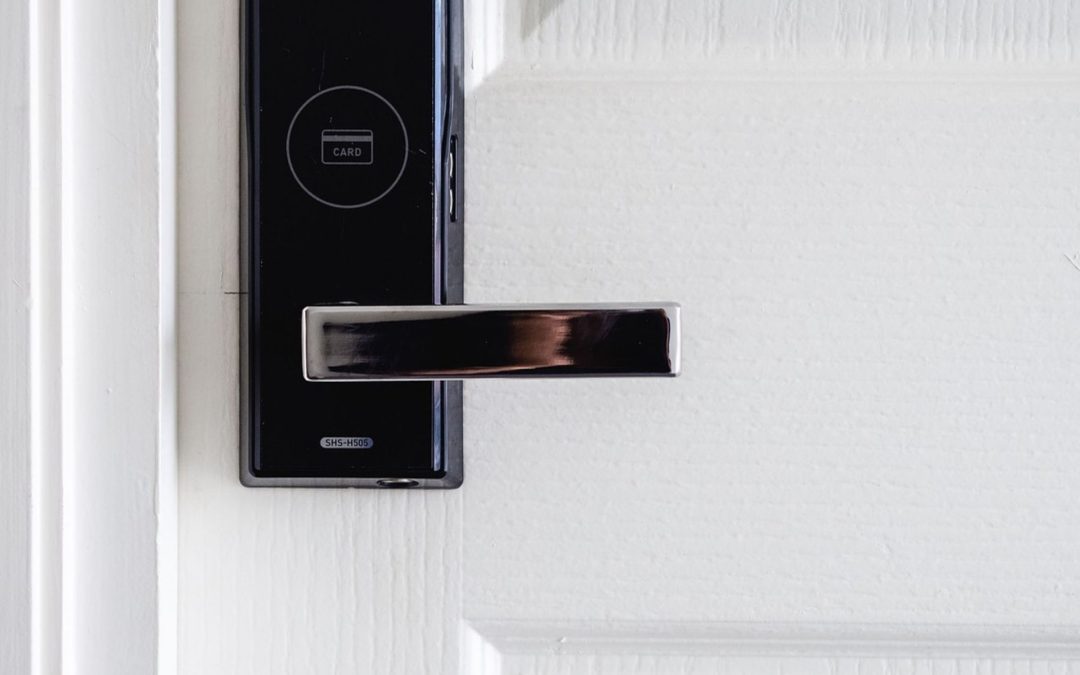
More of your clients are asking for keyless entry, audit trails and app control at the front door. At the same time, they want a front entry that looks resolved in the façade, brings in air and light, and does not feel like a commercial access system bolted onto a house.
When you combine a digital lock with a multi-function entry door, you are stacking several functions into one element: physical security, secure ventilation, threshold experience and electronic access. If you do not plan it, the result can be visually messy and awkward to use. If you do, you can deliver a front door that feels simple and contemporary for the household, not like a piece of tech they are constantly managing.
This article focuses on how to coordinate digital locks with multi-function front doors on Australian residential projects. For the broader “why” of using a multi-function entry door at all, see our architect overview on designing front doors your clients love living with, not screens they tolerate. For façade and ventilation thinking, it pairs well with designing ventilated front entries that do not rely on bolt-on screens.
Start with how the door should feel to use
Before you specify a lock, map the everyday scenarios at the threshold. Digital hardware is easiest to integrate when the door feels calm and legible in these moments
- Coming home with bags, children or a pram
- Letting in visitors or trades
- Going out for a walk or quick errand
- Using the door in “locked but ventilating” mode on hot nights
Ask yourself
- Where is the person likely to stand when they present a fob, code or fingerprint
- How many actions should they need to perform to go from outside to inside, or from closed to secure-ventilation mode
- Does the lock position make sense relative to the internal sliding glass control in the multi-function leaf
The aim is a front door that feels like one coherent object: handle, lock and ventilation all working as a single routine, not three separate systems stuck together. The decision frameworks in designing front doors your clients love living with, not screens they tolerate are a good guide when you are having these discussions with clients.
Choose digital hardware suited to external Australian conditions
Most residential digital locks in Australia are designed for external use, but not all are equal when it comes to exposure, rain and heat. When you are pairing a smart lock with a multi-function door, you want hardware that matches the door’s role as a primary, often windward opening.
Look for
- An IP rating appropriate for external use on a sheltered or semi-exposed door
- Keypad or reader components that can cope with touch in heat, glare and occasional rain
- A lock body that suits the door material and thickness (aluminium or timber)
On Air Flow Doors, current practice is to use a compatible digital mortice or latch set that can operate the main locking points while leaving the internal sliding glass independent. For example, the existing Air Flow blog article on digital locks references a Lionhead external lock with an IP55 rating (dust and water resistant) that suits external assemblies in Australian conditions.
Instead of going brand by brand in your drawings, you can
- Nominate performance requirements (external rated, compatible with the chosen door type, suitable IP rating)
- Coordinate with Air Flow during design development to confirm specific lock models for the project
- Show realistic backset, handle height and escutcheon size in your internal elevations so the door feels like part of the architecture, not an afterthought
Decide how “locked but ventilating” should work with a digital lock
A multi-function entry door is built around a simple idea
- The householder can lock the door as usual
- Slide open the internal glass to bring air through secure mesh
- See and speak to visitors at the secure opening without opening the door fully
Digital locks introduce extra states: auto-lock, passage mode, remote unlocking, scheduled locking. Your job is to make sure these modes still make sense when the door is being used for secure ventilation.
Design questions to resolve
- When the door is in secure-ventilation mode (glass open, mesh closed, door locked), should the digital lock be in its normal locked state or a special “ventilation” mode
- Do you want the outside keypad or reader active whenever the door is locked, regardless of whether the glass is open or closed
- How do you want the door to behave at night if clients often sleep with the entry in secure-ventilation mode
Good practice is to keep the mental model simple
- Door locked (by digital lock) = house secure
- Internal glass position (open or closed) = airflow control
You can reinforce that by
- Keeping all digital access hardware on the main leaf only, not on separate security elements
- Explaining in handover materials how secure-ventilation mode works with the chosen lock’s auto-lock behaviour
Our article on helping older Australians feel steady and confident at their front door is a useful cross-check here: if a client with reduced mobility or confidence can understand and operate the combined door and lock easily, you are on the right track.
Coordinate power, Wi-Fi and cabling early
Battery-powered digital locks minimise cabling but still need coordination. Mains-powered or Wi-Fi-bridged locks definitely do. If you leave it to the electrician on site, you risk visible conduits, misplaced power points or devices that do not get a reliable signal.
At design stage, consider
- Where any required power supplies or gateways will live so they are accessible but unobtrusive
- Whether the home’s Wi-Fi or network coverage at the front door is adequate for the chosen lock and app ecosystem
- How any cabling paths intersect with the door frame, wall reveals and weatherproofing layers
You can use the wall and junction thinking in detailing multi-function entry doors in wall systems as a base, then layer in service paths
- Keep penetrations for power and data away from the most exposed faces of the frame
- Seal penetrations properly so they do not become water paths in heavy rain
- Coordinate with the builder and electrician so devices like doorbells, intercoms and cameras do not crowd the digital lock on a small frontage
On compact façades, these small decisions make the difference between a clean, integrated entry and a visually cluttered stack of devices around the door.
Keep the hardware language consistent with the façade
Even the best digital lock will look awkward if it does not sit comfortably with the rest of the façade. With a multi-function door, you already have glass, mesh and framing to balance; hardware is another visible layer.
Design guidelines that tend to work
- Choose a digital lock finish that matches or complements other external metals (window frames, balcony balustrades, house numbers)
- Keep the number of different metals and colours at the entry low, especially on narrow frontages
- Align the hardware position with clear visual lines on the door leaf so it looks deliberate, not randomly placed
Our façade-focused piece on ventilated front entries that do not rely on bolt-on screens is a useful reference. Treat the digital lock as one more element in the composition, not a separate product. In elevation, you want the entry to read as “one door with a clear handle and access point”, not “a door with extra parts stuck on”.
Think about shared access, guests and trades
Digital locks can change how people use the front door day to day
- Family members may share codes or fobs rather than physical keys
- Guests and trades may be given temporary access codes
- Carers or cleaners may need controlled access for ageing-in-place clients
With a multi-function front door, you also have the secure mesh opening for conversation and verification. Designing from that perspective means
- Positioning the keypad or reader so visitors naturally stand where they can also be seen through the mesh opening when glass is slid back
- Ensuring bells, intercoms and any video units are close enough that people are not moving awkwardly between devices and the door
- Making sure the internal handle and sliding glass control are reachable from a natural standing position just inside the door
You can sanity-check all of this against the scenarios discussed in retrofitting Air Flow Doors into existing homes, where entries have to support a mix of long-term residents and changing visitors. Even on new builds, assuming a future with carers, deliveries and services often leads to better layouts.
Documenting the combined door and lock clearly
To keep specification and site delivery aligned, make the relationship between the multi-function door and the digital lock explicit in your documentation
- On drawings
- Show the door leaf, glazing and mesh arrangement clearly
- Indicate lock position, handle height and swing in internal and external elevations
- Mark any required clearances for escutcheons and readers
- In schedules
- Nominate the door as a multi-function entry door, with aluminium or timber as appropriate
- Specify “digital lock compatible” hardware, with performance requirements rather than just brand names where possible
- Include notes about secure-ventilation use and any specific lock behaviours the client requested
- In notes to builder and electrician
- Flag any power or network provisions for the lock and related devices
- Reference the detailing principles in detailing multi-function entry doors in wall systems so junctions and penetrations are handled carefully
A short coordination note that draws together designing front doors your clients love living with, not screens they tolerate, designing ventilated front entries that do not rely on bolt-on screens, helping older Australians feel steady and confident at their front door and this article can be enough to keep everyone on the same page.
A quick framework for your next project with digital access
For any project where the client is asking for both a multi-function front door and digital access, you can step through a simple framework
- People
- How should the door feel to use in everyday scenarios, and is the combined door plus lock simple to understand
- Place
- Does the hardware language suit the façade and the entry context (narrow lot, busy road, coastal, ageing in place) as covered in the other architect resources
- Performance
- Are exposure, weathering, maintenance and secure-ventilation modes properly resolved in the detail
If the answer feels solid across all three, you are likely giving your clients what they actually want: a front door that is easy to live with, quietly handles security and airflow, and makes digital access feel like a natural part of the architecture rather than a gadget.
Contact & Trade Enquiries
Email:
License: BLD-327764
Phone: 0417 870 758
Adelaide, South Australia
Air Flow Doors is protected by Design Right Certification.