
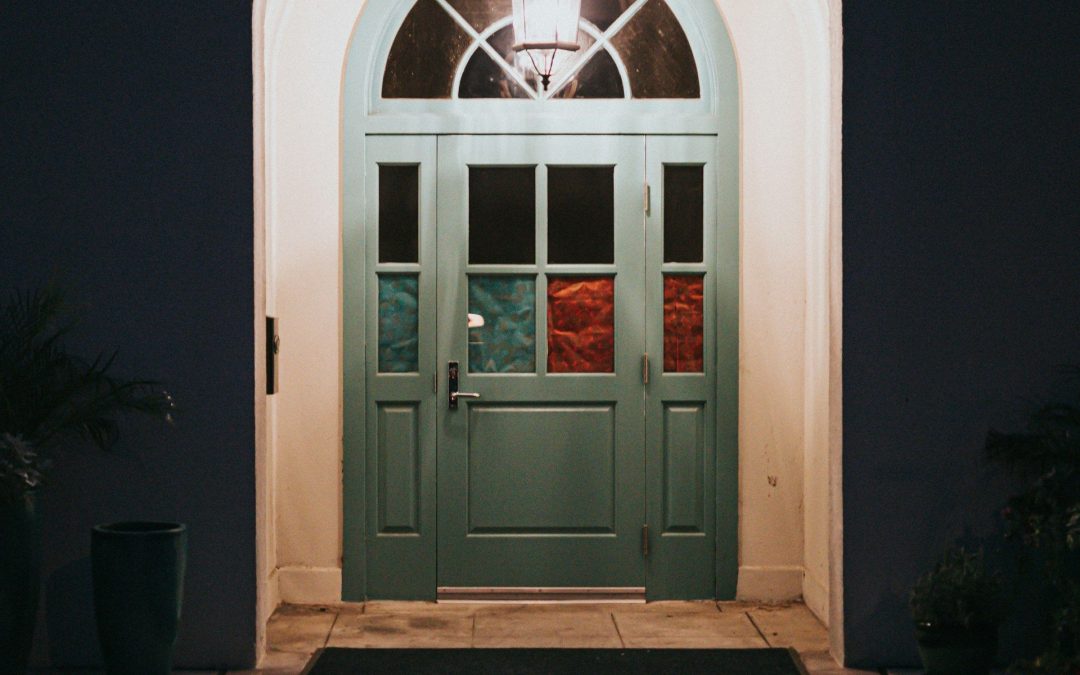
When a client tells you they plan to stay in their home “for as long as possible”, the front door becomes more than a styling exercise. A small lip at the threshold, a heavy leaf, an awkward lock or a dark, airless entry can be manageable at 40 and genuinely stressful at 75. The front door is where confidence is either quietly supported or slowly eroded.
Universal design at the entry is about making that threshold work for older residents, visiting family, carers, delivery drivers and future buyers, without turning the house into something that feels clinical or “modified”. It asks you to treat the front door as a shared interface that should stay usable as people’s needs change.
If you want a broader context first, you can see how this sits within a general strategy for architect designed, secure, ventilated front doors. This article then narrows in on ageing in place and universal design.
Why the front door matters so much for ageing in place
For many older people, the front door is where they decide whether it is worth going out, worth answering, or worth opening up to airflow. When that experience feels uncertain or physically demanding, behaviour shifts quietly
- Short walks are skipped because getting in and out feels like hard work
- Answering the door is delayed or avoided, especially after dark
- Windows and doors stay closed when they could be opened for fresh air
- Visitors are managed from deeper inside the house rather than at the threshold
From an architectural point of view, the front door is being asked to
- Provide a secure, legible entry point
- Allow easy operation for people with reduced strength, balance or reach
- Support safe conversations with visitors at the door
- Contribute to light and air in the circulation space behind it
- Present a calm face to the street rather than a “fortress”
Universal design does not mean over designing for a specific disability. It means treating these needs as normal variation and making the front door forgiving rather than fussy.
Common barriers in typical entries
Most standard front doors in Australian housing were not drawn with ageing in mind. Small decisions that seem harmless on a plan can have a real impact over time. Typical friction points include
- A small step or lip at the threshold that catches walkers, scooters and tired feet
- Heavy doors that are hard to pull open from a standing start
- Handles and locks that rely on tight twisting or gripping
- Two separate leaves to manage once a security product is added in front
- Dark entry halls that only feel safe when everything is shut tight
None of these alone forces someone out of their home. Together, they chip away at confidence. The front door slowly becomes something to work around rather than something that quietly supports daily life.
A multi-function entry door gives you more room to remove these barriers without sacrificing security or airflow, because you are resolving the system in one leaf instead of juggling a door and separate screen.
How a multi-function entry door supports universal design
An Air Flow multi-function door combines a solid entrance door, security mesh and a controllable ventilation opening into one unit. The main leaf includes a sliding glazed section with security mesh behind it, so your client can lock the door and still move air and see visitors.
For older or less mobile occupants, this offers several advantages
- One leaf to open rather than a door and a separate security screen
- One main handle and lock to understand and operate
- A simple shift from “closed” to “locked but breathing” by sliding the internal glass
- The ability to see and speak to someone at the door while remaining behind the mesh
From your perspective as the designer
- You can treat the multi-function door as the default entry solution in ageing in place projects rather than adding accessibility as an afterthought
- You can integrate the glazed and mesh portion into your façade, as explored in a design-focused look at ventilated front entries, rather than trying to hide a bulky security door
- You can detail thresholds, hardware and clearances with the long-term user in mind
The key is to use the extra capability of the multi-function door to reduce cognitive and physical load, not to create more complexity.
Designing the approach and threshold for confidence
Universal design begins before anyone touches the handle. The path, landing and threshold strongly influence whether the entry feels approachable or risky.
Questions to ask as you sketch
- Is the approach path relatively flat, even and easy to read from street to entry
- Is there a level standing area outside the swing arc where someone can pause with a walker, stick or bags
- Can you minimise changes in level at the threshold without compromising weather protection
Practical design moves that help
- Provide a generous, level landing at the door, wide enough for a mobility aid and companion
- Use non slip, low glare surface finishes at the landing and threshold
- Choose threshold profiles that keep the step as small and rounded as practical for the exposure zone
Because you are working with a single multi-function door rather than a door and screen, there is only one swing arc and one primary opening to resolve. Our more technical guide on detailing multi-function entry doors in wall systems can help you coordinate these decisions with real wall systems and weathering strategies.
Making operation obvious and low effort
Older clients may have reduced grip strength, arthritis or limited shoulder mobility. Interaction with the door needs to be obvious and low effort.
Design guidelines that support this
- Use lever handles that can be pushed with the side of the hand rather than knobs that demand a tight grip
- Choose locks that avoid fine twisting or pinching actions when possible
- Keep handle and lock heights within a comfortable band so people do not have to reach up or bend down excessively
- Place the internal sliding glass control within easy reach from a natural standing position
A multi-function door lets you keep all of this in one control zone instead of distributing different functions across two leaves. The result is a simpler mental model for the occupant: one door, one lock, one place to manage ventilation.
Balancing light, views and a sense of safety
Many older clients want more light at the entry but feel exposed when glass is introduced. The multi-function door gives you more nuanced options because the security mesh and glazed section work together.
You can tune the entry to the street context by
- Using clear laminated glass where overlooking is moderate and a visual connection to the street is a positive
- Using translucent glass where the door is close to public footpaths or shared circulation, maintaining light without direct views
- Positioning the glazed section so visitors naturally align with the mesh protected opening when they stand at the door
This way, “more light” does not automatically mean “more exposure”. The occupant can stand in a well-lit entry, look out through the mesh and glass, and still feel that there is a clear, secure boundary between inside and outside.
Supporting carers, visitors and deliveries
Ageing in place often involves more people using the front door: support workers, cleaners, family members, medical deliveries. Universal design at the entry needs to consider them as well.
Think about
- How easy it is for a support worker to bring in equipment, shopping or a walker through the single door opening
- Whether someone arriving with a trolley or pram can wait comfortably at the door while the occupant approaches
- How intercom, bell and lighting positions support clear interaction at different times of day
A ventilated, secure multi-function door allows the occupant to talk through the mesh and see who is there without having to open the leaf fully for every visit. For many older Australians, this simple ability to check “who is at my door” calmly is just as important as physical accessibility.
Integrating universal design into your standard approach
Universal design at the front door does not need to be flagged as a special feature. It can become part of your normal way of drawing entries.
You can use this article alongside
- A high level framework for when to choose secure, ventilated front doors in Australian homes, which helps you decide where a multi-function door makes sense at all
- A design oriented guide to ventilated front entries that still look like architecture, not add-ons, which keeps the façade and street presence working
- A technical reference on detailing multi-function entry doors in wall systems, which helps you draw jambs, thresholds and junctions that work
Used together, they give you a path from concept to detail that keeps the front door easy, secure and comfortable for the people who will live with it over time.
A simple next step on a current project
On any current project where the client has mentioned staying long term, or where you know older residents will be using the home, you can start small
- Identify the main front door and sketch the approach, landing, threshold and door leaf as a single universal design problem
- Ask whether a multi-function entry door would reduce effort and risk compared with a solid door and separate screen
- Check your sketch against the ideas in this article: approach, threshold, operation, light, safety and multiple users
If that one door becomes easier, calmer and more legible as a result, you are already moving universal design from theory into the everyday experience of people who want to age in place in homes that support them.